

Homelessness in the United States is an urgent public health issue and humanitarian crisis. It impacts cities, suburbs, and rural towns in every state including Wisconsin. According to the annual Point in Time Count, in 2021 4,327 people experienced homelessness. In 2022, that number jumped to 4,775. Economic hardships caused by the COVID-19 pandemic along with the sharp rise in housing costs have led to the increase in those experiencing homelessness. However, there are many more reasons as to why people are homeless.
Homelessness Data & Trends | United States Interagency Council on Homelessness (usich.gov)
Causes of homelessness include:
Lack of Affordable Housing
According to the National Low Income Housing Coalition, the U.S has a shortage of 7.3 million rental units available those that are low income. Only 34 affordable and available rental homes exist for every 100 extremely low-income renter households.
Across Wisconsin, there is a shortage of affordable rental homes available to extremely low-income households (ELI), whose incomes are at or below the poverty guideline or 30% of their area median income (AMI). A large majority of these households are cost burdened spending much of their income on housing costs.
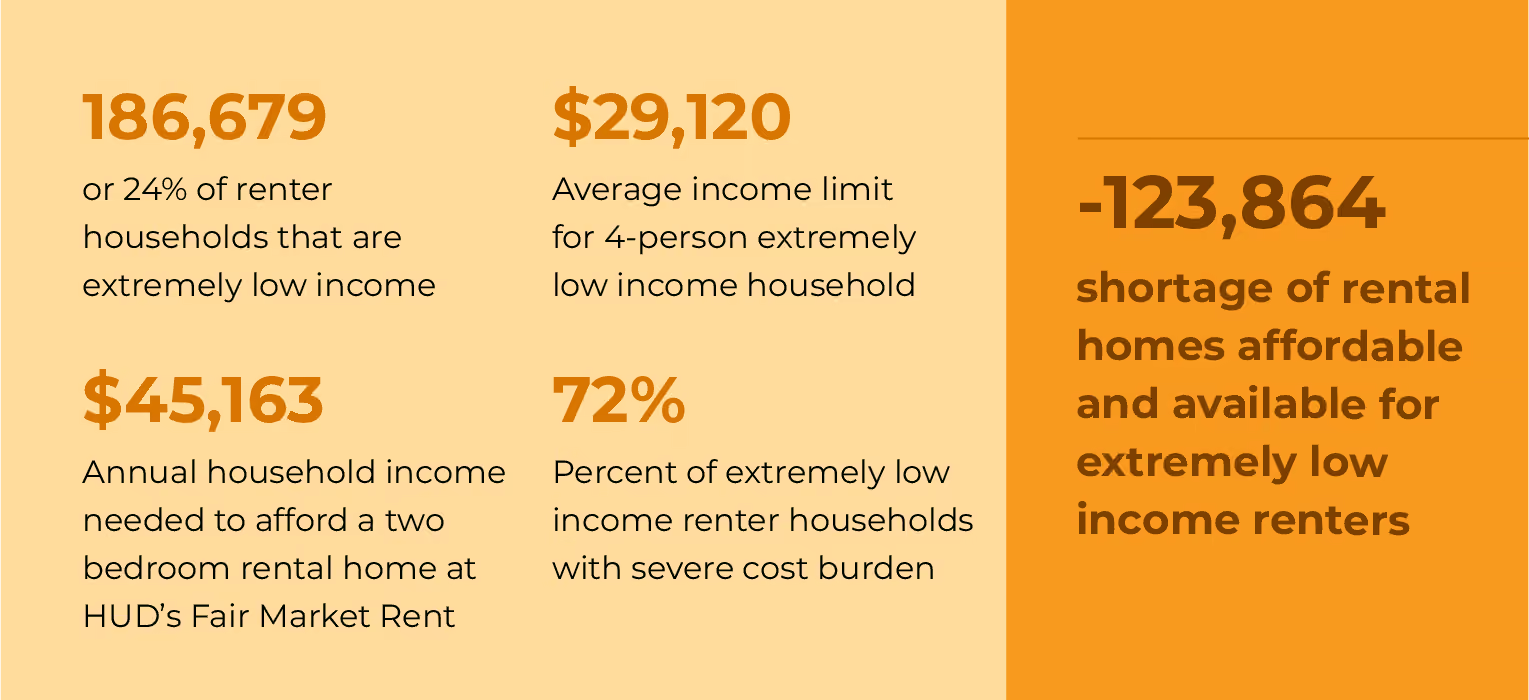
In places across America, there is a severe lack of affordable housing. Without readily available affordable housing, many homeless Americans will continue to cycle in and out of homelessness.
Low Income
Today, many households become homeless because they simply do not make enough money to pay for housing. According to the National Alliance to End Homelessness, households that are low-income typically are unemployed or don’t make enough money through their current employment to cover necessities. This is often due to a challenging labor market, limited education, criminal record, unreliable transportation, unstable housing situation, poor health or disabilities.
For those that are employed, wages have been stagnant and have not kept pace with the increase in housing costs. Too little income and a severe lack of affordable housing leaves many households at risk of homelessness.
Health
Those experiencing physical or behavioral health challenges, or any with a long-term disability condition may lead to homelessness. Often health issues are made worse by experiencing homelessness. Having a disabling condition can make it difficult to locate or maintain employment and support basic needs. This in turn makes it difficult to exit homelessness.
According to the U.S. Department of Housing and Urban Development, people living in shelters are more than twice as likely to have a disability compared to the general population. On a given night in 2023, 31 percent of the homeless population reported having a serious mental illness, 24 percent conditions related to chronic substance abuse, and nearly 11,000 people had HIV/AIDS.
https://endhomelessness.org/homelessness-in-america/what-causes-homelessness/health/
Domestic Violence
Many survivors of domestic violence become homeless when leaving an abusive relationship. According to the National Alliance to End Homelessness, a domestic violence experience is common among youth, single adults, and families who become homeless. For many, it is the immediate cause of their homelessness. Survivors of domestic violence may turn to homeless service programs seeking a safe temporary place to stay after fleeing an abusive relationship. Others may turn to homeless service programs due to the lack of economic resources to secure or maintain housing after leaving an abusive relationship.
In 2023, approximately 10.4% percent of all Emergency Shelter, Transitional Housing, and Safe Haven beds in homeless service systems were targeted to survivors of domestic violence and their families.
Racial Disparities
Most minority groups, especially African Americans and Indigenous people, experience homelessness at higher rates. This is due to long-standing historical and structural racism.
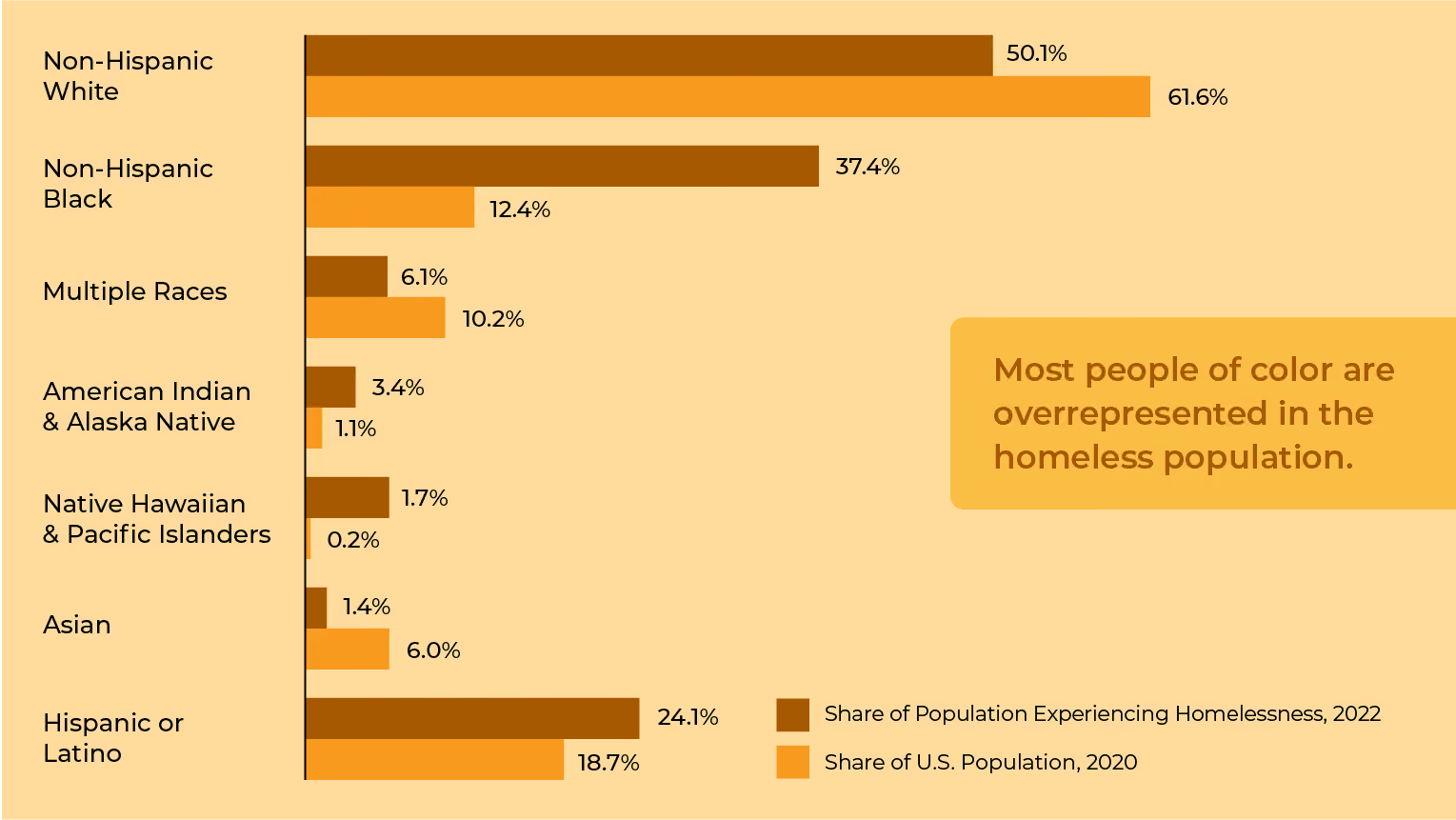
According to the National Alliance to End Homelessness, the largest disparity can be found among African Americans, who account for 37 percent of people experiencing homelessness but only represent 13 percent of the general population in the U.S.
African Americans have been systemically denied rights and socioeconomic opportunities. The lingering effects of racism continue to perpetuate disparities that impact homelessness which include:
- Poverty
- Segregation/rental housing discrimination
- Incarceration
- Access to quality health care
Myth vs. Fact
Myth: People who are homeless choose to be homeless.
Fact: Homelessness happens due to many reasons, but common reasons are economic issues and physical/behavioral health issues.
When faced with these crisis situations, a lack of affordable housing leads people to homelessness. When faced with homelessness, many individuals will choose to live outside rather than in shelters due to disabilities, criminal history, or an unwillingness to part with friends or family. Some are denied shelter due to being full or shelters putting barriers to entry such as sobriety, not allowing pets, no criminal history, or other discriminatory measures. In all, being homeless is stressful, humiliating, and dangerous. Believing that people choose to be homeless creates a dangerous myth that allows us to ignore the trauma of homelessness.