

What is Coordinated Entry?
The Wisconsin Balance of State CoC Coordinated Entry System is a critical component in our effort to end homelessness within the CoC. Coordinated Entry is an important process through which people experiencing or at risk of experiencing homelessness can access the crisis response system in a streamlined way, have their strengths and needs quickly assessed, and quickly connect to appropriate, tailored housing and mainstream services within the community or designated region.
Standardized assessment tools and practices used within local coordinated assessment processes consider the unique needs of children and their families as well as youth. When possible, the assessment provides the ability for households to gain access to the best options to address their needs, incorporating participants’ choice, rather than being evaluated for a single program within the system. The most intensive interventions are prioritized for those with the highest needs.
Before Coordinated Entry, the person served was often:
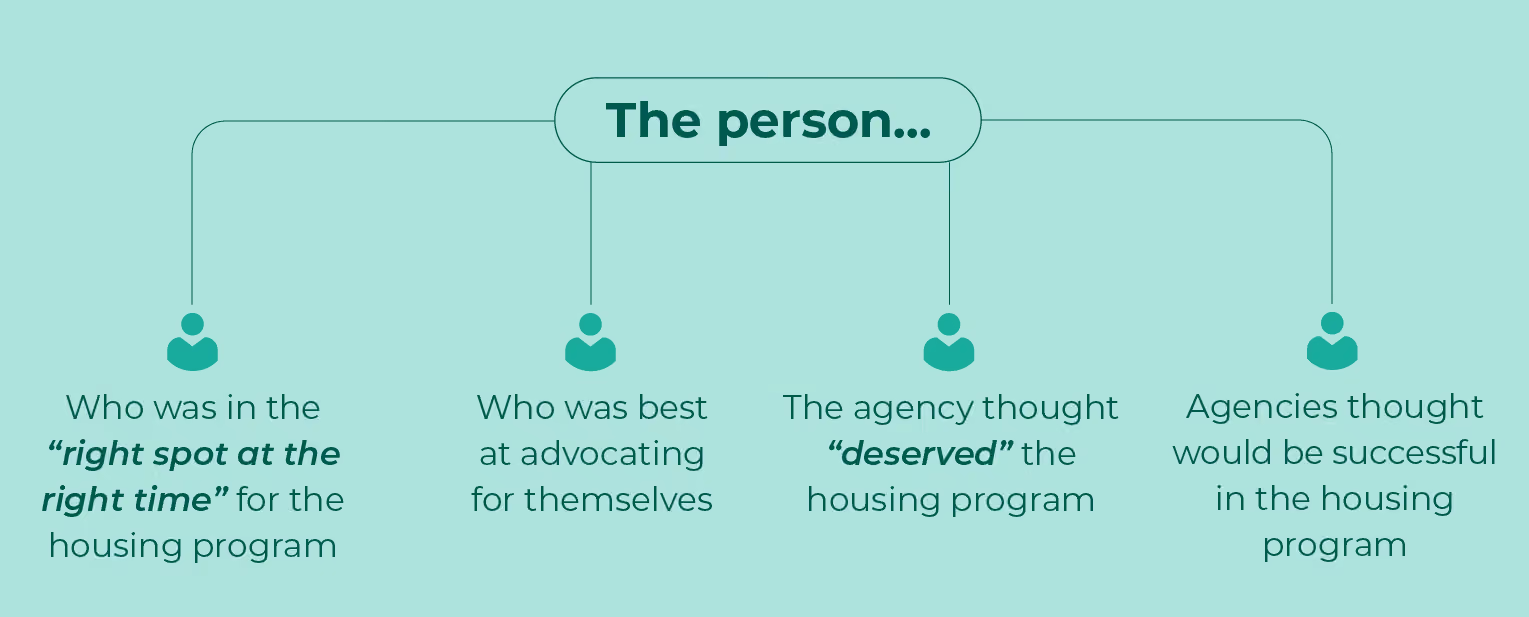
This created a severe lack of a systematic, nonbiased approach to whom we serve. Those who were not actively seeking services, had high service needs, or those with disabilities, fleeing domestic violence, or youth were often missed.
The Coordinated Entry process must, to the maximum extent feasible, ensure that people with more severe service needs and levels of vulnerability are prioritized for housing and homeless assistance.
The “No Wrong Door” approach to Coordinated Entry ensures people experiencing homelessness can access services regardless of how they enter the Coordinated Entry.
Myth vs. Fact
Myth: Coordinated Entry is not effective in assisting those experiencing homelessness.
Fact: Coordinated Entry can be an effective tool in several ways:
- It can streamline rehousing efforts: Coordinated entry allows for quick and efficient navigation of local resources, programs, and services for those experiencing homelessness. Instead of putting the burden of service navigation on the individual, it puts it in the hands of organizations.
- Aligns Resources: Coordinated Entry allows communities to see programming as more of a group effort, as it allows service providers to work and collaborate to assist those in need.
- Reduces Disparities: The people who are most in need of immediate housing are often those that are not being served. Coordinated Entry allows us to take a holistic look at the needs of those experiencing homelessness and prioritize helping those most in need.
Coordinated Entry Video
Lorem ipsum dolor sit amet, consectetur adipiscing elit, sed do eiusmod tempor incididunt ut labore et dolore magna aliqua. Ut enim ad minim veniam, quis nostrud exercitation ullamco laboris nisi ut aliquip ex ea commodo consequat.